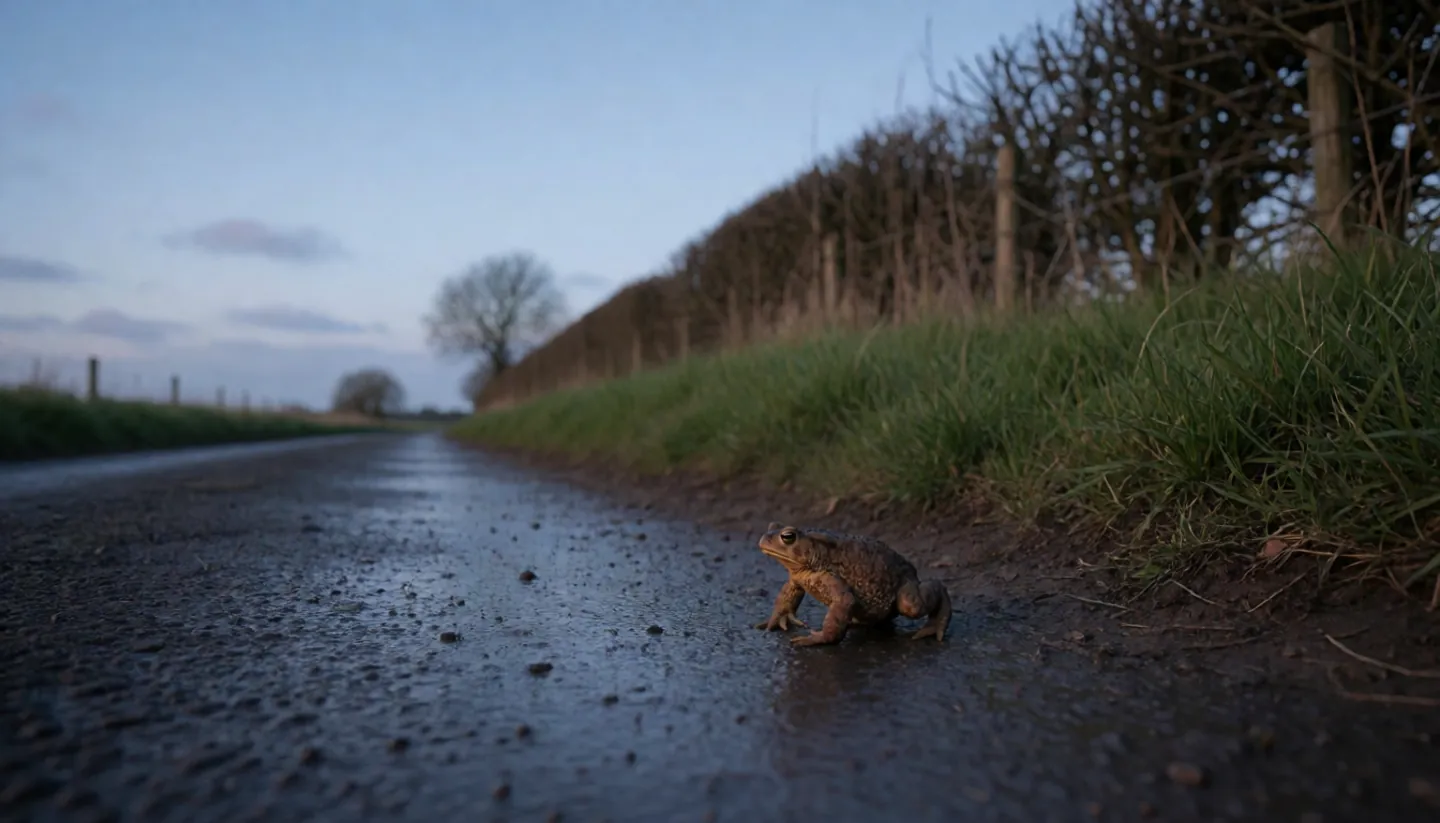
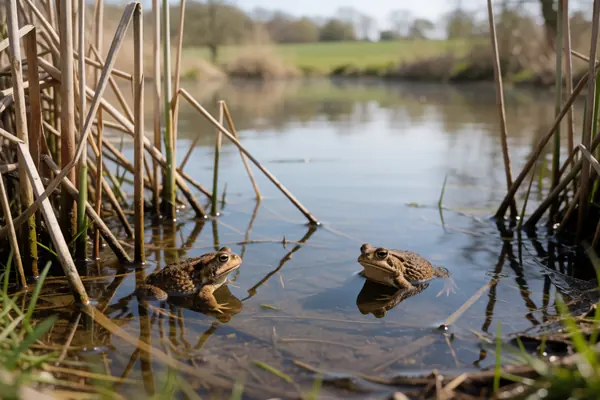
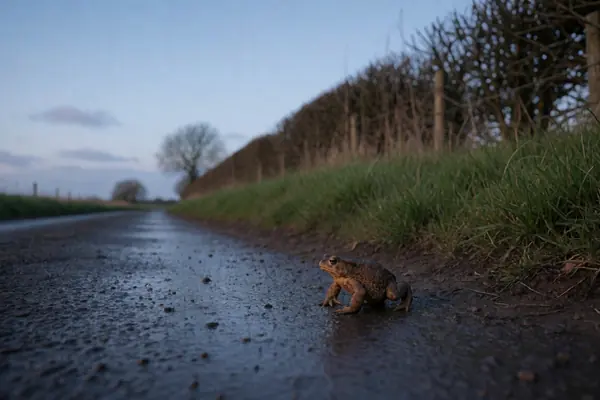
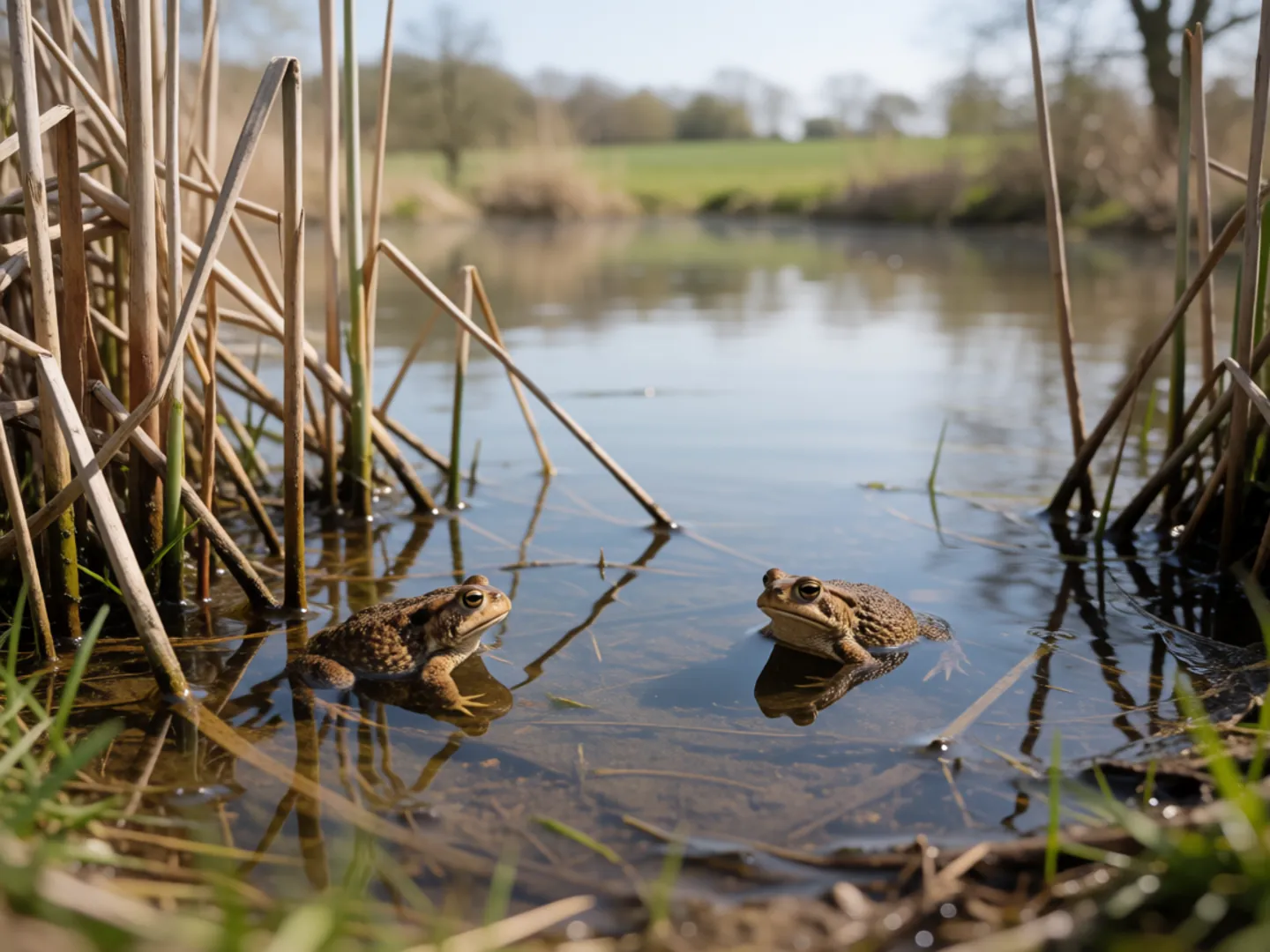
Each spring, toads walk home to the pond, whatever is in the way.
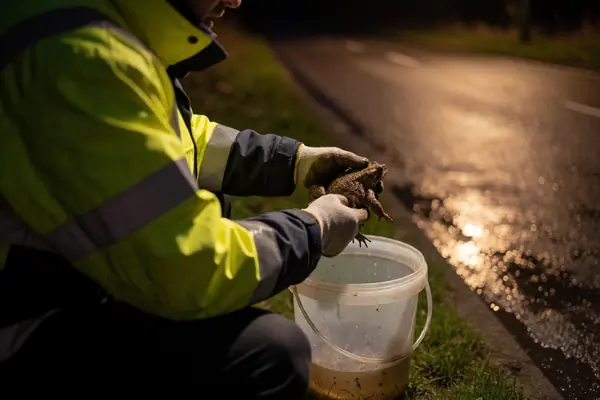
Common toads often return to their ancestral breeding pond and follow the same route every year, which can lead them straight across a road. Volunteers on toad patrols carry them over. This independent guide explains the migration, the patrols and what their counts reveal.
Pick an evening to see how likely toads are to be on the move, based on what Froglife tells its patrol volunteers. The bar shows the chance of a big migration night.
Based on Froglife's Toads on Roads guidance for patrollers. Local weather and sites vary, so patrols check forecasts and their own crossing.
TWO NUMBERS WORTH KNOWING
Helped across, but still declining.
Patrols save many toads each year, yet long-term counts show a falling population.
156,227 toads
Toads helped at UK crossings
Reported by 280 toad crossing sites in 2025. The same patrols still recorded 17,251 toads killed at manned crossings.
TOADS ON ROADS · FROGLIFE 2025
50% or more
Decline in central and south-east Britain
Froglife, citing a 2016 study of volunteer patrol data from 153 UK populations, says toads have declined by 50% or more in central and eastern or south-eastern regions.
LONG-TERM TREND · FROGLIFE
The 2016 PLOS ONE study found common toads declined in each decade since the 1980s in the UK and Switzerland, even at sites with long-running patrols. Froglife cautions that year-to-year counts are affected by weather.
IF YOU WANT TO HELP
Join a patrol, stay safe.
Froglife coordinates the Toads on Roads project and lists registered crossings. Its safety guidance is clear that your own safety comes first.
Find your nearest crossing
Search Froglife's Toads on Roads map and contact the patrol manager; patrolling is a commitment through the season.
Be seen and be careful
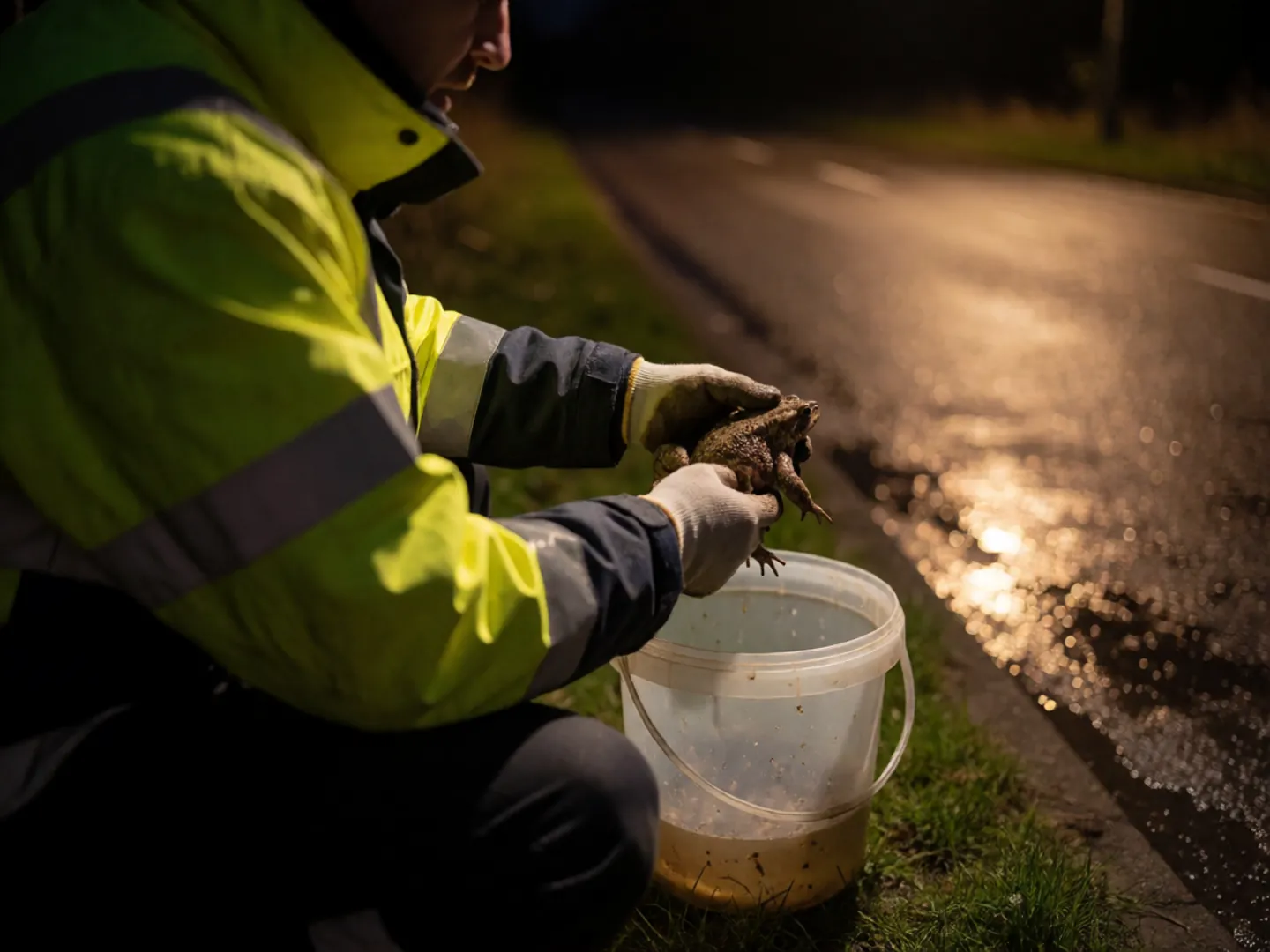
Wear reflective clothing, carry a torch, never shine it at drivers, and do not patrol a road that is clearly dangerous.
Handle gently
Froglife suggests disposable gloves, no hand sanitiser before patrolling, and washing hands well afterwards.
Count and report
Record toads helped, toads killed, nights patrolled and patrollers, so the national data stays useful.
AI-generated image, not a photograph of a real person or place.AI-generated image, not a photograph of a real person or place.
WHY ROADS ARE HARD ON TOADS
Kerbs, drains and traffic.
Froglife lists the ways roads harm toads: traffic, raised kerbs that stop toads reaching the other side and guide them into drains, gully pots they fall into and cannot leave, broken migration routes and lost ponds and habitat.
It points planners to tunnels, ponds, wildlife fencing and wildlife-friendly kerbs. The 2016 study notes that patrols only cover adults heading to the pond, not the return trip or juveniles leaving it, and that UK vehicle numbers almost doubled after 1980 to 35 million in 2013.
Questions
Questions people ask
Why do toads cross roads?
Common toads often migrate back to their ancestral breeding ponds each spring and follow the same route regardless of what is in the way, according to Froglife. Where a road cuts that route, they cross it.
When do toads migrate?
Froglife says migration can run from as early as January to as late as April. Key signs are the first mild temperatures, above 5ºC, together with rain, with toads moving from around dusk.
What is a toad patrol?
A group of volunteers who watch a stretch of road toads must cross to reach their pond, collect them in buckets and carry them across. Froglife's Toads on Roads project has run for over twenty years.
Are common toads declining?
Yes. A 2016 PLOS ONE study of volunteer data found UK and Swiss toad populations declined in each decade since the 1980s. The common toad is a priority species in England under the NERC Act 2006, section 41.
Is it safe to help toads on the road?
Only if the road is safe. Froglife says never attempt a rescue on a clearly dangerous road or one with poor visibility, wear reflective clothing, carry a torch, and follow your patrol manager's instructions.